
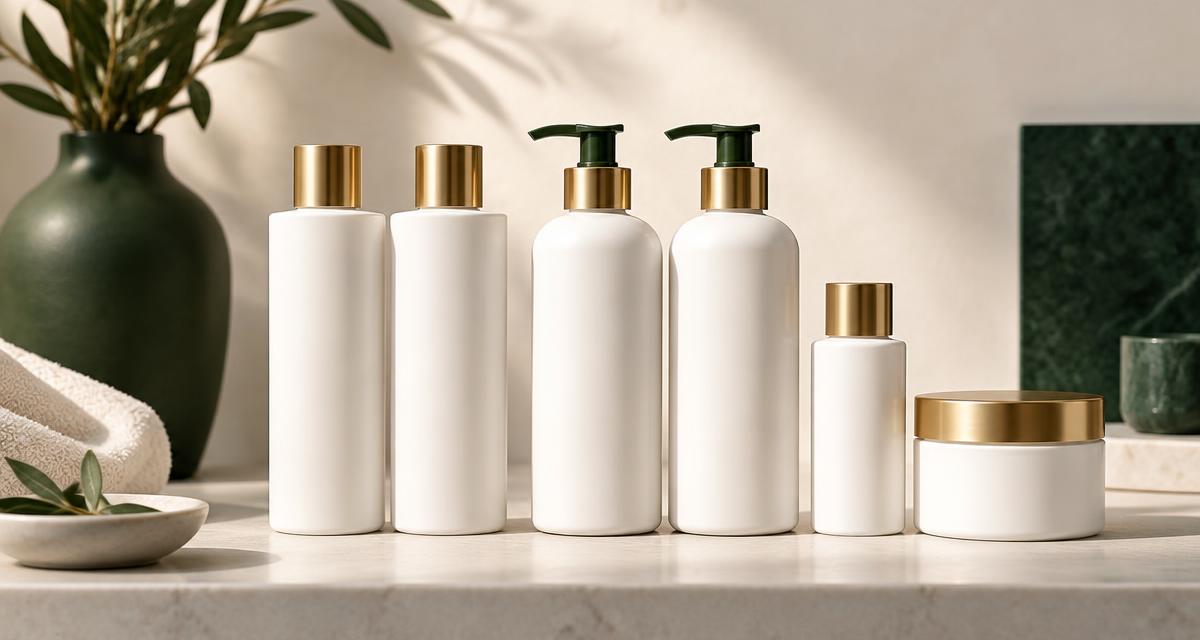
Sourcing private label hair care works when you fix the model first — catalogue base, adapted base or full custom — then qualify suppliers against formulation ownership, minimum batch per SKU, documentation for your destination market and realistic lead time. Unit price is the last filter, because landed cost, registration and rework decide profitability far more than cents per litre.
- Decide the sourcing model before you shortlist suppliers.
- Ask who owns the formula; a reseller cannot adjust it for you.
- Minimums are quoted per SKU in litres; ours is 300 litres.
- Budget landed cost: freight, duty, registration, testing and artwork.
- Map the regulatory path for the destination before production starts.
Most hair care brands do not fail because the formula was wrong. They stall because the sourcing model, the minimum order quantity and the regulatory dossier were decided in the wrong order. This guide walks through the decisions in the sequence a manufacturer would ask about them.
Choose the sourcing model before the supplier
"Private label" covers three quite different commercial arrangements. The one you choose determines your capital needs, your lead time and which suppliers can even quote you.
Full service (finished goods)
The manufacturer formulates, fills, labels and packs the finished product under your brand. You receive retail-ready units. Best when you have no filling line and want the shortest path from brief to shelf. What to ask: who owns artwork approval, who supplies packaging components, and what the lead time is after artwork sign-off.
Bulk supply (drums)
You buy the approved bulk formula in drums and fill locally. Best when you already have or can rent filling capacity in your market, or when local filling reduces duty and freight per unit. What to ask: bulk stability data, recommended shelf life after opening, and filling parameters such as viscosity, temperature and pH range.
Custom development (ODM)
A bespoke formula developed for your positioning: Brazilian keratin, nanoplastia, protein treatments, bond repair, scalp care. Slower to launch, but it gives you a formula competitors cannot buy off a catalogue. What to ask: formula ownership, exclusivity terms, and how many revision rounds are included before tooling starts.
Qualify hair treatment manufacturers properly
Hair care is not a generic cosmetics category. A factory that is excellent at body lotion may have no experience with smoothing chemistry, cationic conditioning systems or high-viscosity masks. Work through this checklist on every quote you receive.
- Manufacturing capability: does the supplier actually produce, or resell another factory's catalogue?
- Category depth in hair: smoothing, treatment masks, bond builders and scalp care behave very differently in production.
- MOQ per SKU and how it is measured — units or litres. Eco Beauty works from 300 litres per SKU.
- Stability and compatibility testing, including with your chosen packaging.
- Regulatory dossier support for your destination market, not just the country of manufacture.
- Documented batch records, retention samples and certificates of analysis.
- Incoterms, packing configuration on pallets, and whether the supplier ships by sea and air.
- Reformulation policy when a raw material is restricted in your market.
Budget beyond the unit price
The quoted price per unit or per litre is rarely the landed cost. Build your model with the formula cost, primary and secondary packaging, artwork and plate charges, stability and compatibility testing, the safety assessment and registration in your destination market, freight and insurance, import duty and local warehousing. Sea freight lowers the cost per unit but adds transit time; air freight is the sensible choice for launch quantities and for samples going to a trade show with a fixed date.
Map the regulatory path for your destination
Compliance follows the market where the product is sold, not the market where it is made. Raise this at quotation stage — a formula can usually be adjusted cheaply before production and expensively afterwards.
European Union / UK
Cosmetics need a CPNP notification (SCPN in the UK), an EU/UK-based Responsible Person, a Product Information File with a Cosmetic Product Safety Report, INCI labelling in the local language, and compliance with the Annexes of Regulation (EC) 1223/2009. Formaldehyde-releasing smoothing actives are restricted — ask the manufacturer for a compliant alternative rather than assuming the domestic Brazilian formula ships as-is.
United States
MoCRA requires facility registration and product listing with the FDA, a designated Responsible Person, and safety substantiation. Labelling follows FDA and FPLA rules, with ingredients declared in descending order.
Gulf / Middle East
Most GCC markets require registration through the local health authority and often a certificate of free sale plus legalised documents. Arabic label elements are commonly mandatory.
Export from Brazil
ANVISA-regulated manufacturing, a certificate of free sale, commercial invoice, packing list, bill of lading or air waybill, and — where applicable — a certificate of origin such as EUR.1 or a Mercosur certificate to reduce duty. Ask early whether the supplier handles export documentation or whether you must appoint a freight forwarder.
A realistic launch timeline
- Brief and positioning: category, claims, target market, price point.
- Formula selection or custom development, then lab samples for your approval.
- Packaging selection and compatibility testing with the approved formula.
- Artwork with compliant labelling for the destination market.
- Regulatory dossier: safety assessment, PIF or equivalent, notification or registration.
- Production, quality control, retention samples and certificates of analysis.
- Export documentation, packing on pallets, and shipment by sea or air.
Brands that prepare the regulatory step in parallel with sampling — rather than after production — typically reach the shelf a full quarter earlier.
Where Eco Beauty fits
We manufacture in Campinas, São Paulo, and supply both finished private label products and bulk drums, from 300 litres per SKU, across smoothing, treatment, bond repair and scalp care. Our team supports export documentation and regulatory dossiers for the markets we ship to. Start with the private label models or request a quote.
Can a Brazilian manufacturer supply EU-compliant hair care?
Yes, provided the formula is built against Regulation (EC) 1223/2009 from the start and you appoint an EU Responsible Person for the CPNP notification and Product Information File.
What documentation should come with every shipment?
Certificate of analysis, technical data sheet, MSDS, INCI list, commercial invoice, packing list and the transport document, plus a certificate of free sale or origin where the destination requires it.
Build your line with a Brazilian manufacturer.
Full service or bulk supply, from 300 litres per SKU, with export documentation for the EU, US and Gulf markets.
Request a quote